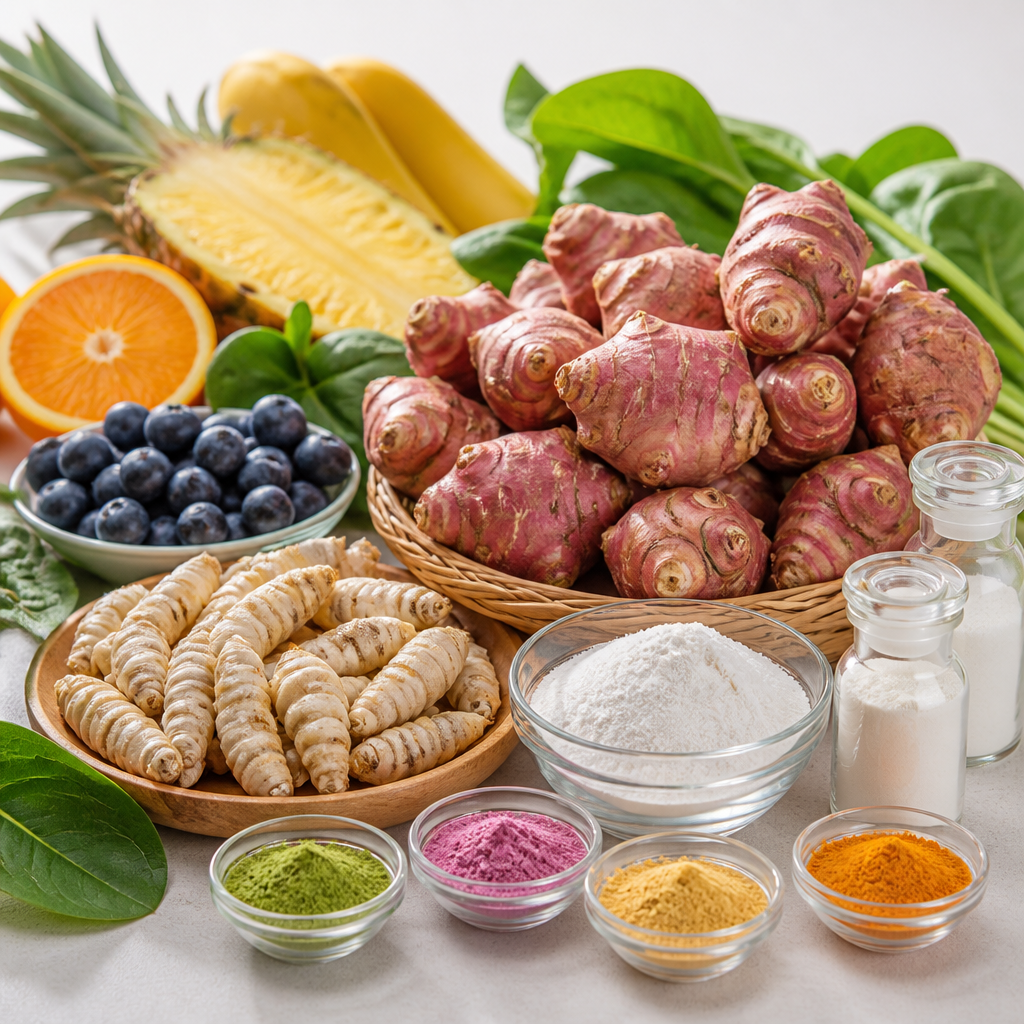

Fruit and Vegetable Powder as a Clean-Label Ingredient Option
Fruit and Vegetable Powder as a Clean-Label Ingredient Option
As consumers pay more attention to food ingredient lists, shorter and more recognizable ingredient names are increasingly preferred. The clean-label trend emphasizes ingredient transparency and minimal processing. Within this context, fruit and vegetable powders — produced through physical processes such as freeze-drying or spray-drying — are being used in meal replacements, bakery products, snacks, and beverages.
I. Clean-Label Perspective on Fruit and Vegetable Powder
Clean label typically involves easy-to-understand ingredient names, clear sources, and less processing. Fruit and vegetable powders are made from fresh produce and can retain natural colors and basic flavor components.
In the food industry, these powders are often used to provide naturally sourced color, flavor, and certain fruit/vegetable solids.
II. Common Characteristics in Food Formulations
Naturally sourced color & flavor: Beet powder (red), barley grass powder (green), and pumpkin powder (golden yellow) are examples.
Basic nutritional & physical properties: Good reconstitution, low-calorie substitution potential, and retention of polyphenols & dietary fiber through freeze-drying.
Industrial adaptability: Low water activity supports shelf stability; wide application in solid drinks, baking, and meal replacements.
Ingredient differentiation: Blueberry powder or kale powder offers distinct plant-based profiles for different product lines.
III. Typical Application Examples
| Application Area | Common Types | Typical Use |
|---|---|---|
| Bakery & desserts | Spinach, purple sweet potato, strawberry | Natural color, increased fruit/vegetable content |
| Solid drinks / meal replacements | Avocado, apple, banana | Fruit aroma and dietary fiber |
| Infant supplementary food | Carrot, broccoli | Clear ingredient source, easy blending |
| Meat products | Celery (contains natural nitrates) | Partial replacement of synthetic preservatives |
IV. Conclusion
Fruit and vegetable powders, derived from natural sources, align with the clean-label direction of transparent and recognizable ingredients. They offer formulators an option for color, flavor, and texture while potentially reducing the use of certain artificial additives. For brands focusing on simpler formulations and clear ingredient origins, fruit and vegetable powders represent a practical ingredient choice.