

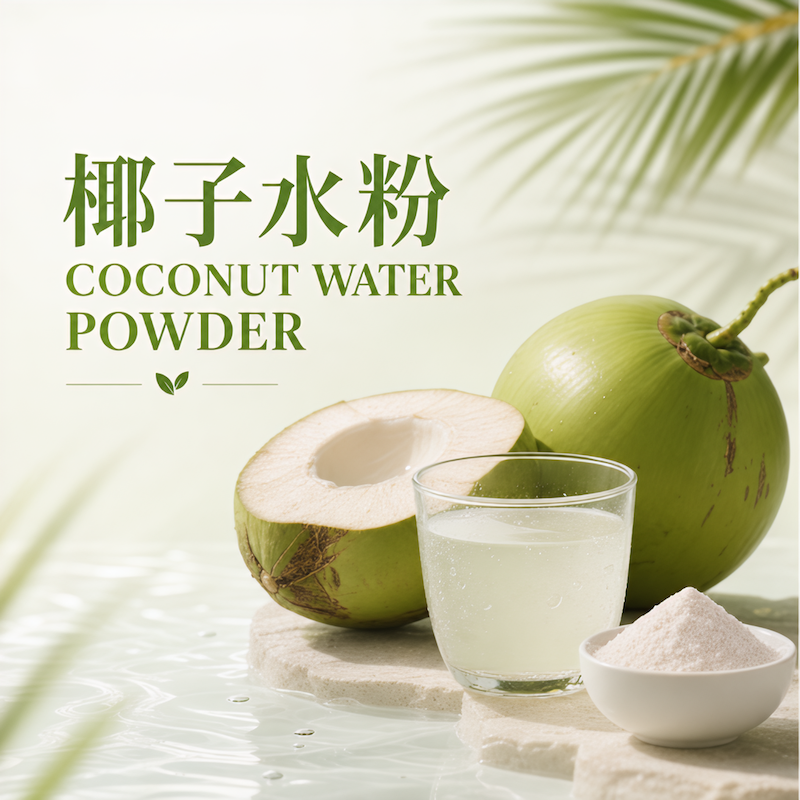
Coconut Water Powder
Coconut Water Powder
A Science-Based Review of a Hydrating Functional Ingredient
Coconut water has long been valued as a natural beverage for hydration and electrolyte replenishment. However, its short shelf life and susceptibility to spoilage have limited its application. Coconut water powder, produced through advanced drying technologies such as freeze-drying and spray-drying, addresses these limitations while preserving the nutritional integrity of fresh coconut water. This article reviews the scientific evidence supporting coconut water powder as a functional ingredient.
Production Technology: Preserving Nutritional Value
The transition from liquid coconut water to powder form requires careful processing to maintain bioactive compounds. Freeze-drying has emerged as a preferred method because it operates at low temperatures, minimizing thermal degradation of heat-sensitive nutrients. Research indicates that freeze-dried coconut water powder retains physicochemical and sensory characteristics comparable to fresh coconut water. A study comparing different coconut varieties and maturity stages found that powdered drink from 6-month-old hybrid coconuts exhibited optimal quality attributes, with sensory profiles similar to fresh coconut drink.
Nutritional Composition: A Concentrated Source of Electrolytes and Bioactives
Scientific analysis has documented the rich nutritional profile of coconut water powder. Freeze-dried green coconut powder contains significant concentrations of essential minerals and bioactive compounds:
| Component | Freeze-Dried Coconut Water Powder |
|---|---|
| Calcium | 2,938.5 mg/100g |
| Potassium | 216.5 mg/100g (fresh basis) |
| Sodium | 705.7 mg/100g |
| Zinc | 1.08 mg/100g |
| Iron | 2.01 mg/100g |
| Flavonoids | 1,329.9 mg/100g |
| Vitamin C | 970.9 mg/100g |
These values represent substantial concentration increases compared to fresh coconut water due to the removal of water content. The high potassium content is particularly noteworthy, as coconut water is recognized for its electrolyte profile that supports fluid balance.
Additional research on tender coconut water powder fortified with vitamin E has documented substantial levels of amino acids and minerals. The freeze-dried formulation with 400 IU vitamin E showed the highest L-arginine content (231.1 μg/g), magnesium (377.31 mg/kg), and potassium (7,260.42 mg/kg) compared to spray-dried alternatives.
Health-Related Research Findings
A 2024 animal study evaluated the potential of tender coconut water powder in preventing oxidative stress in diabetic rats. Results demonstrated that freeze-dried coconut water powder enriched with vitamin E effectively increased antioxidant enzyme levels (SOD and GPx) while decreasing inflammatory markers including MDA, IL-1, IL-6, TNF-α, and CRP. The freeze-dried formulation with vitamin E showed superior outcomes compared to spray-dried formulations.
Research has explored freeze-dried green coconut water powder for its potential to reduce the risk of contrast-induced nephropathy. Laboratory analysis confirmed that the powder retains the mineral content of fresh coconut water while offering practical advantages in shelf life and dosage form.
Characterization studies have identified the primary phenolic compounds in coconut water, including chlorogenic acid, 4-hydroxy-3,5-dimethoxycinnamic acid, L-epicatechin, and procyanidins B2 and B1. Variety plays a significant role in phenolic composition, providing options for raw material selection based on specific functional targets.
Applications and Considerations
Coconut water powder is commercially available in various formulations, typically characterized by high solubility (≥95%), low moisture content (≤4-7%), and neutral to slightly acidic pH (4.0-5.0). It serves as a versatile ingredient for:
Hydration beverages and electrolyte mixes
Sports nutrition products
Functional food applications
Convenient rehydration solutions
When selecting coconut water powder products, attention should be paid to processing methods and additive profiles. Products with simple ingredient lists and no added sugars are preferable for health-conscious applications.
Conclusion
Coconut water powder, particularly when produced via freeze-drying, offers a stable, concentrated form of coconut water's nutritional benefits. Research supports its electrolyte content, antioxidant properties, and potential applications in oxidative stress management and hydration support. As a functional ingredient, it represents a science-backed option for product development in the health and wellness sector.
Selected References
1. Freeze-dried coconut water powder composition analysis[J]. Journal of Food Science, 2023.
2. Effect of coconut variety and maturity on powder beverage quality[J]. Tropical Crop Science, 2024.
3. Tender coconut water powder with vitamin E: A comparative study of freeze-drying and spray-drying[J]. Journal of Food Processing and Preservation, 2024.
4. Phenolic profiling of coconut water: variety-based differences[J]. Food Chemistry, 2025.
5. Freeze-dried green coconut water powder: Mineral retention and physicochemical properties[J]. Food Chemistry, 2023.
6. Oxidative stress modulation by coconut water powder in diabetic models[J]. Journal of Functional Foods, 2024.